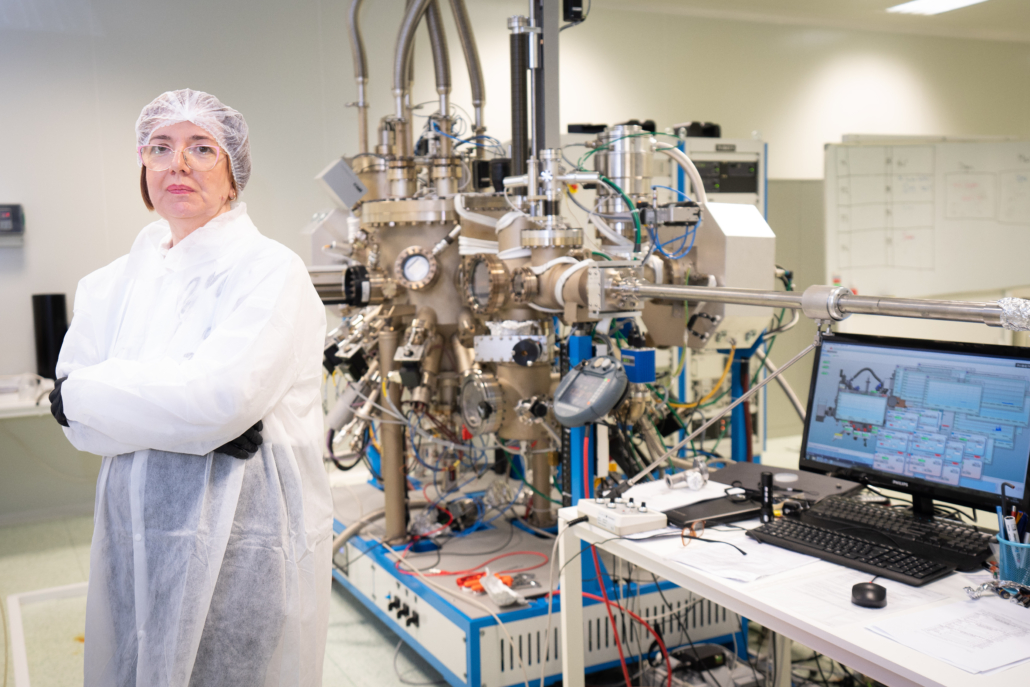
As part of our commitment to equity, inclusion and diversity within the nanoelectronics community, SiNANO is launching a series of portraits highlighting the women researchers and contributors who shape our institute. Through these short spotlights, we aim to showcase the diversity of paths, expertise and perspectives that drive our scientific ecosystem forward.
Each profile offers a glimpse into their work, their role within SiNANO, and the message they wish to share with the next generation of scientists. In this atricle you will discover a little more about Carmen Moldovan, Director of the Research Centre for Integration of technologies and Head of Laboratory of Microsystems for Biomedical and Environmental Applications at IMT-Bucharest.
Can you introduce yourself?
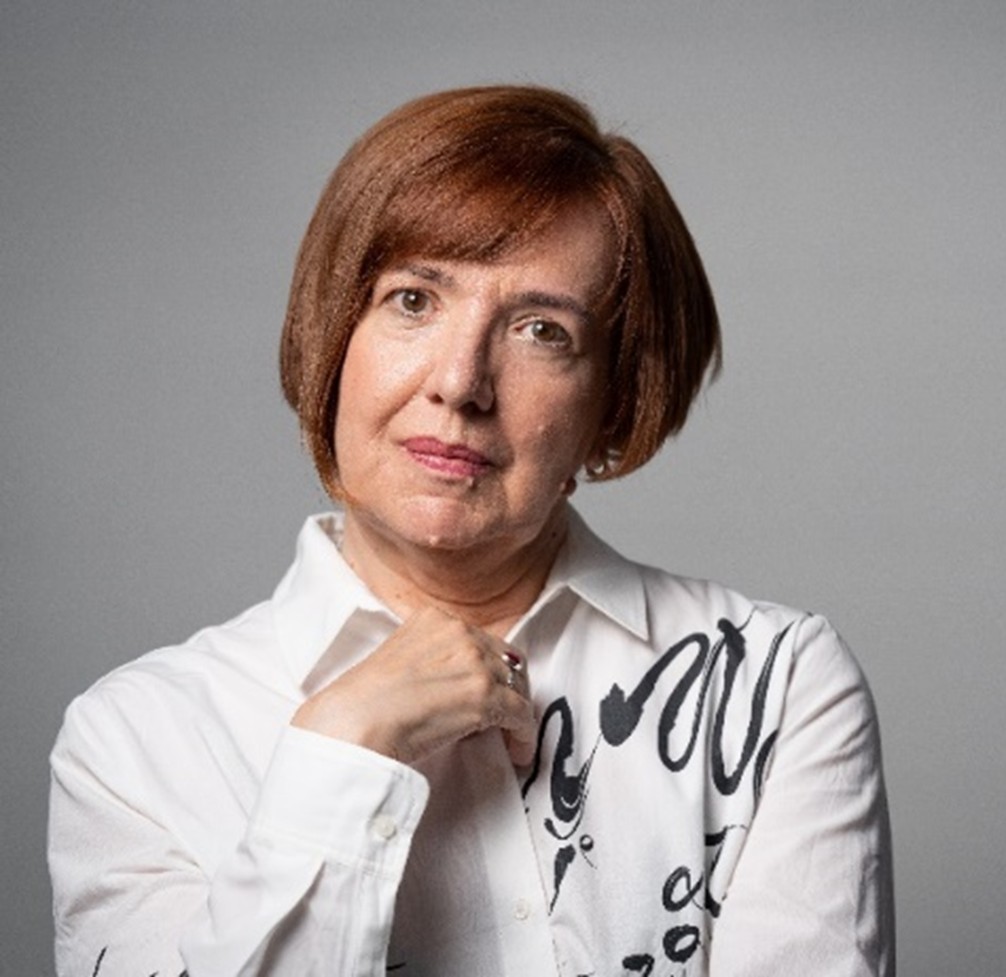
I am Dr. Carmen Moldovan, the Director of the Research Centre for Integration of technologies and Head of Laboratory of Microsystems for Biomedical and Environmental Applications at IMT-Bucharest.
I graduated Electronics and Telecommunications Faculty at Politehnica University Bucharest and I hold a PhD in Microelectronics.
Since my high school period I was interested in Physics and Poetry. After many years of activity I still consider that designing and building micro or nanodevices is fascinating and wonderful like a poem.
Over the last 25 years I was acting in the area of microsystems for Biomedical and Environmental Applications and was performing research with a focus on the development of
- Microsensors: Chemo and biosensors: ISFET, micro- nano electrodes, electrochemical sensors, resonant gas sensors, microsensor arrays, NW based sensors; FTBAR sensors (detection of TNT;
- Mechanical sensors (pressure and accelerometer), actuators, MEMS/NEMS technology; Microelectrodes for neuronal electrical activity recording and stimulation;
- System integration (silicon, polymers, biomaterials, sensitive materials, signal processing, data processing and processing)
- Systems development for biomedical applications, food control and pollutant gases detection.
- PiezoMEMS harvesters for low power sensors, monitoring patients’ vital signals.
I was working as coordinator or partner in more than 25 EU projects and 35 National projects and I published more of 150 Papers and Patents and I always found great satisfaction in proposing and delivering the research/ project outcomes which are contributing in my vision to change the people quality of life and to bring economic benefits to the society.
Can you explain your work in simple terms?
One of the most recent and exciting research work is related to development of a neural system for bidirectional connection with exoprostheses and exoskeletons, part of an EU project, aiming to allow unprecedented neural control of upper arm or paralized limbs constituting an important step in medical applications. The concept of the project and the electrodes interfacing the nerve fascicles and able to bidirectionally communicate with exoprostheses and exoskeletons are very new innovative aspects.
What is your role within the SiNANO Institute?
I am IMT-Bucharest’s contact person for SINANO Institute since our application has been accepted (2020) and I am currently participating at SINANO activities. I am also leading the SINANO’s “Gender Equality, Diversity and Inclusion (EDI)” Task Force contributing to all related activities.
What does being a woman in science represent for you? / What impact do you think greater representation of women in science would have?
I think that the women in science represent the normality and it is the right place to be. Any biases in the society or at working places need to be discouraged and the women should feel comfortable and free to choose any position, role or responsibility in science. There are still biases in many organisations, countries, and society and the statistics indicate that completely equal rights, salaries or management positions are not yet achieved and the balance women – men needs to be very much improved.
I believe that the women presence in science is definitely creating added value by creativity and innovation and is having an important impact in the perception of women by the society. A successful woman is a model for the children and for the fellow women and is a voice to be listen.
What message would you like to share with young girls who hesitate to pursue science?
The choice of a career is influenced by many factors. At early age the most important are the family influence, the school influence, and more recently the social media influence. The personality of the young girl is also important and the relation that she has with the parents, teachers, friends, other persons/ models.
If a young girl likes any science domain and feels at least 50% + the “call” of that domain I recommend her to not hesitate. Go forward, take the risks, overcome the difficulties, prove your talent and intelligence! At the end the complete success will come and will make you happy and fulfilled.
In my opinion the science makes us better persons, well organised, with a synthetic mind and capable understand and to solve the complex problems of our life on Earth and in the Universe. Looking to the scientific progresses and the amazing achievements of the technology, nothing would be possible without science. So, if you want to be part of that journey, involve you-self and you will not regret.