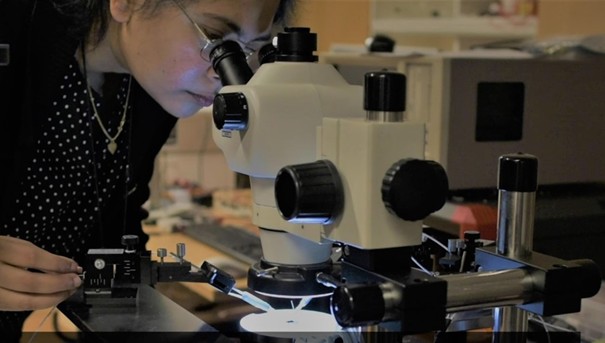
As part of our commitment to equity, inclusion and diversity within the nanoelectronics community, SiNANO is launching a series of portraits highlighting the women researchers and contributors who shape our institute. Through these short spotlights, we aim to showcase the diversity of paths, expertise and perspectives that drive our scientific ecosystem forward.
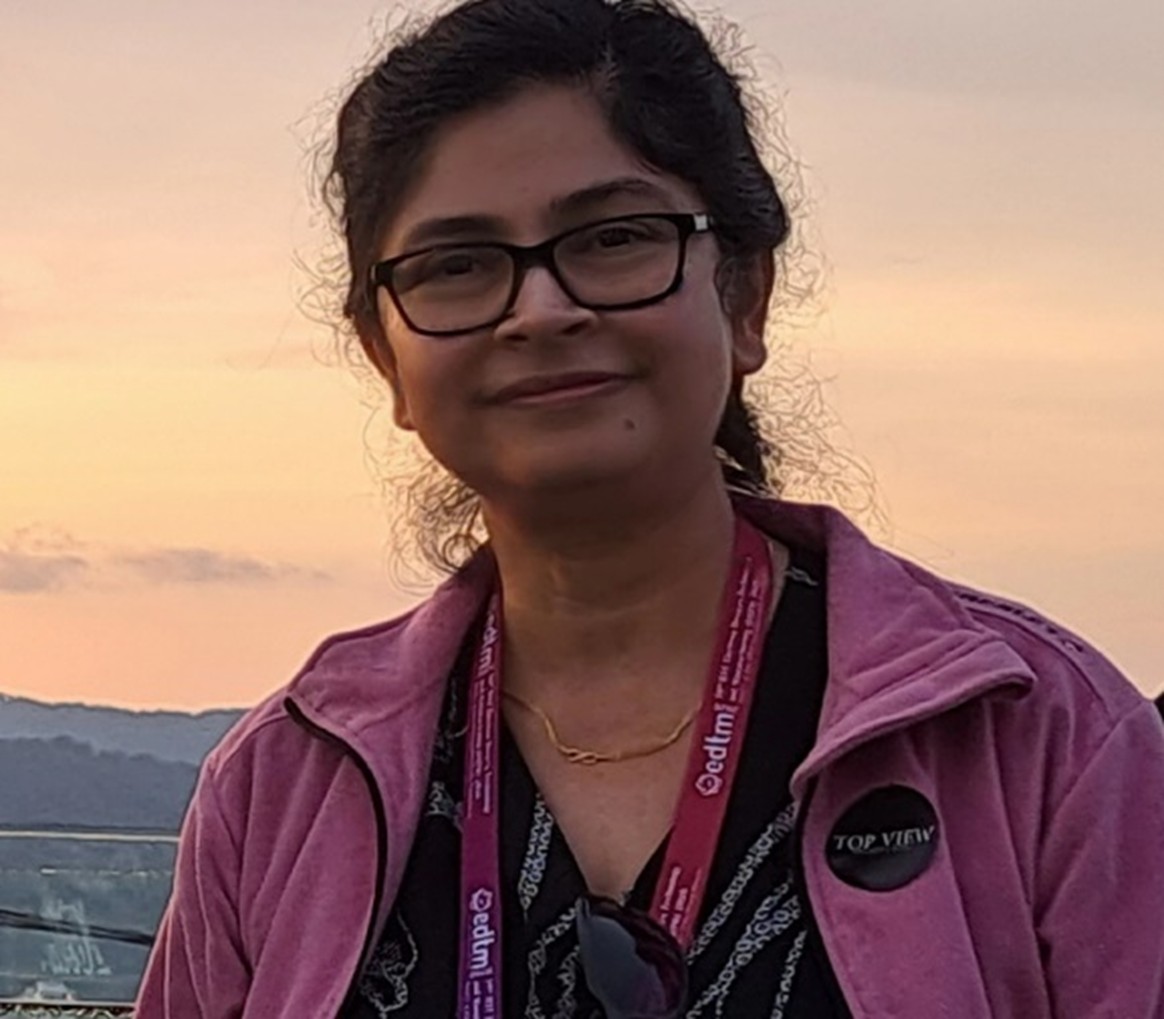
Each profile offers a glimpse into their work, their role within SiNANO, and the message they wish to share with the next generation of scientists. In this atricle you will discover a little more about Sayani Majumdar, associate professor of electrical engineering at Tampere University in Finland.
Can you introduce yourself?
I am Sayani Majumdar, working as associate professor of electrical engineering at Tampere University in Finland.
I never specifically thought I would become a scientist, but science subjects were my most favourite ones right from my childhood. Science runs on logic, explains the universe in its entirety and makes us increasingly curious about unknowns. Solving a hard maths or physics problem, for instance. It’s so deeply satisfying, especially when it has any direct impact on performance of a system. What could be more elegant?
My father was a science teacher, and he had an amazing capability of explaining maths and science in such a simple way that maths and science never felt hard to me. He always used to explain physics in terms of everyday events and right from the beginning I understood without knowing science, I won’t be able to understand and explain the world. Probably, that was the beginning.
I am trained as a Physicist, have a PhD in Solid State Physics with Electronics being my specialization. Since then, I worked as post-doctoral fellow, Junior group leader, Academy Research Fellow in different educational organizations in Finland and in MIT in USA. In 2019, I moved to a technical research organization as a Senior Scientist and eventually joined my current position in 2023.
Can you explain your work in simple terms?
In broad sense I work with semiconductor devices but in a more focused way I develop semiconductor devices for human brain inspired computing. Why that is important? Because human brain is one of the most energy efficient computing machines that can perform very complex computation in most sustainable way. Today’s artificial intelligence relies on hardware that was originally built to do only scientific computation. That’s why their energy consumption is very high while doing intensive data-driven tasks. A fully hardware paradigm shift is therefore necessary for AI to become sustainable. That puts my research in context.
The most exciting aspect of my work is to work at the intersection of different disciplines. Brain inspired or neuromorphic computing is a field that requires knowledge of semiconductor device physics, Electrical engineering, computer science mathematics, statistics and neuroscience. To make a breakthrough in this field, collaboration with people of different expertise is essential and that is always exciting. Learning from each other, solving complex problems, developing things together and finally to see the entire system working in a way, you didn’t even expect it to work. That is so satisfying.
What is your role within the SiNANO Institute?
I am the representative for Tampere university.
What does being a woman in science represent for you? / What impact do you think greater representation of women in science would have?
Women have always been great contributors in all fields of science. When I read stories of women in science like Marie Curie, Rosalind Franklin, Lise Meitner and many others in my childhood, I always felt so motivated to become a scientist like them but maybe push the boundaries a little further. To me, women, if encouraged and mentored properly, can enrich science tremendously as we bring different perspective into problem solving, we are meticulous, hardworking and smart. Becoming a scientist requires all these qualities. What I felt particularly in my life is a career in science has shaped me as a different human even. From a shy little girl from a suburban small town in India to a confident scientist working with best of the scientists and engineers from all corners of the world, it is a journey worth remembering.
Greater representation of women in science would eliminate bias and young girls would not feel insecure in this field anymore. A great mentor can change a lot of things. A woman don’t always have to be a mentor to a woman scientist. Men can be a good mentor to a woman scientist as well. I believe my father was my first mentor. It’s just about sparking the inquisitiveness, building the confidence and making her believe she is no less capable for this task.
What message would you like to share with young girls who hesitate to pursue science?
If studying science makes you happy, then just follow your heart. You don’t have to worry about the societal prejudice of women not being good enough for science. Hesitation about your capability in pursuing a hard subject is not only a trademark of woman but it comes to men as well. Only way to overcome the fear is to work slowly and continuously towards your dream.
“Did you Know that believing in something strongly can physically modify your brain and make you a different person. This phenomenon is rooted in neuroplasticity, the brain’s ability to rewire its neural pathways in response to new information, experiences, and deeply held beliefs. When you consistently focus on a thought and work towards it, your specific neural connections strengthen, effectively changing the physical structure and functional organization of your brain over time.”